Resources / Insights
Evidence-Based Leadership in the Social Sector: Moving Beyond Good Intentions
Why data literacy and systems thinking are becoming essential leadership capabilities
By Amera Schaefer
Good intentions have never been the problem in the social sector.
What has been harder to build is the trust and infrastructure needed to turn intention into something organizations can learn from, adjust, and improve over time. That is what evidence-based leadership is really asking of us, not to become researchers, but to become organizations that know how to listen to what the work itself is telling them.
For decades, much of the sector has operated reactively. This is not because leaders prefer it that way, but because prevailing incentive structures encourage it. Funders reward intervention. Grants prioritize programs over systems. Outcomes are often measured only at the end of funding cycles rather than continuously.
In that environment, proactive approaches are not simply difficult, they are structurally discouraged. Preventing crises is rarely recognized or compensated.
Yet evidence-based leadership offers a different path.
Data Literacy Is No Longer Optional

In many conversations about data in the social sector, the focus quickly turns to spreadsheets, dashboards, and metrics.
Those tools matter, but they represent only part of the picture.
Observations from case managers during home visits, coordinators’ insights about barriers clients are facing, and the stories shared by community members are also forms of data. These qualitative insights often reveal patterns and early signals that formal metrics miss.
True data literacy requires fluency in both.
It means recognizing when quantitative trends are emerging, but also noticing when narratives and lived experiences point to something deeper. Leaders who integrate both types of information into decision-making conversations are better positioned to understand what is actually happening within their organizations and communities.
Evidence-based leadership is not about collecting more data. It is about learning how to interpret the information that already exists.
Building Data Capacity Without Breaking Your Team
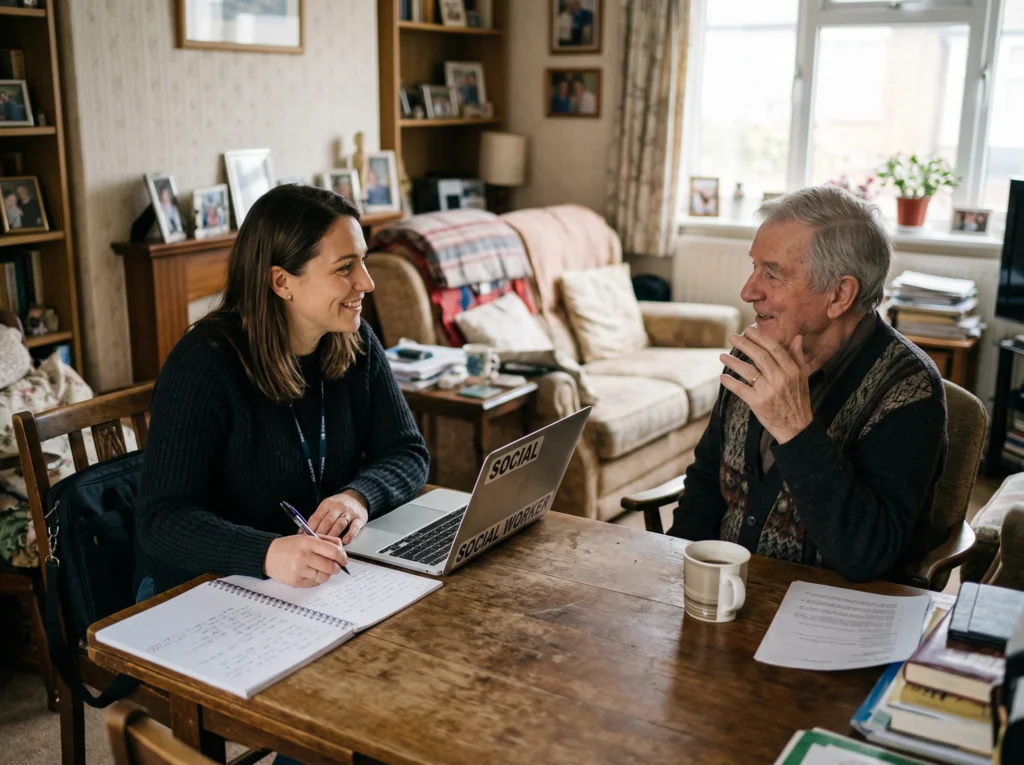
One of the most common barriers organizations face is the belief that meaningful data work requires a dedicated data team.
Most nonprofits simply do not have the resources for that.
As a result, many organizations postpone building data capacity altogether. But the organizations that make progress are rarely those with the most resources. They are the ones that approach the challenge more intentionally.
Instead of building entirely new systems, they integrate data collection into everyday operations. Staff observations, client feedback, and frontline experiences are captured alongside traditional program metrics.
Case notes become more than documentation, they become organizational intelligence.
When feedback loops are designed well, frontline staff often identify emerging issues long before those patterns appear in formal reports. Over time, staff begin to recognize that their observations contribute to organizational learning rather than simply fulfilling compliance requirements.
That shift changes culture.
Knowing When to Look Outside Your Walls
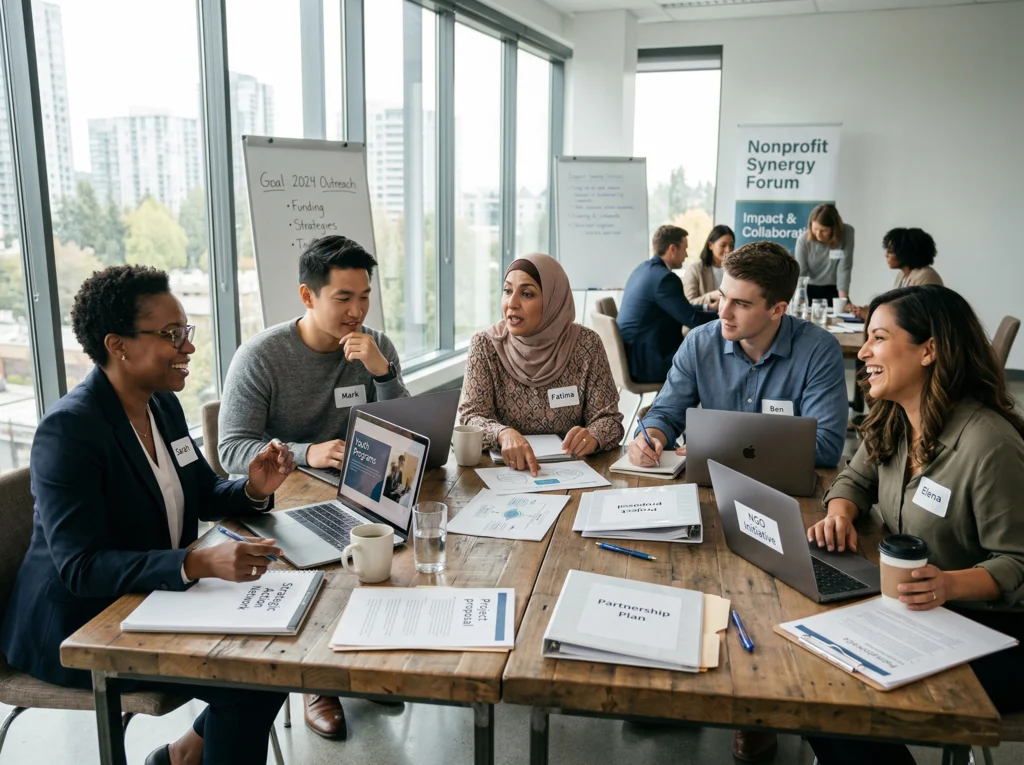
Organizations do not need to tackle this work alone.
Many of the organizations advancing most quickly in this space are forming partnerships with universities, community foundations, and regional data collaboratives. These partnerships provide analytical expertise, community insight, and additional capacity.
They also create opportunities to engage in methodologies that might otherwise feel inaccessible, such as community-based participatory research, focus groups, and ethnographic approaches.
These methods are not simply academic exercises. They help organizations understand problems through the perspectives of those most affected by them.
When organizations combine quantitative results with narrative insights and community-level context, the conversation changes. Instead of asking whether a program “worked,” leaders begin asking deeper questions:
Did the intervention reach the right population?
Was it implemented at the necessary scale?
Was it addressing the right problem in the first place?
These are harder questions, but they are the ones that lead to meaningful change.
External partners can also help organizations identify internal blind spots. Sometimes organizations collect large volumes of data that ultimately provide little insight. In other cases, small adjustments to the questions being asked or to the ways information is captured, can dramatically improve learning.
Holding the Tension Between Human-Centered Work and Measurement

For many leaders in human services, there is a real tension between relational work and measurement.
Human services work is deeply personal and context-driven. The people organizations serve do not fit neatly into categories, and there is understandable discomfort with reducing complex experiences to data points.
But much of that tension comes from an overly narrow definition of data.
When data includes stories, lived experience, practitioner insights, and community perspectives alongside program metrics, measurement becomes less extractive and more reflective of the work itself.
In this way, developing a data culture becomes an extension of relational work rather than a competing priority.
The question shifts from “How do we measure this?” to “How do we build systems that listen continuously?”
What Analytics-Driven Operations Teach You

Organizations that adopt this approach often discover that the most valuable insights are not the ones they originally set out to measure.
The most important signals may come from changes in client communication, emerging patterns in staff observations, or shifts in community needs.
The relationships between staff wellbeing, program fidelity, client outcomes, and community context often reveal far more than any single metric.
Staff burnout, for example, can begin to influence client outcomes long before it appears in exit interviews. Program design flaws may surface in client feedback before they appear in formal grant reporting. Caseload pressures often reveal themselves through small indicators long before they escalate into crises.
Leaders who synthesize information across these dimensions gain a more complete understanding of what is happening within their organizations.
From Accountability to Learning

This is the shift that distinguishes organizations using data primarily for accountability from those using it for learning.
Accountability-focused cultures tend to ask a single question:
Can we prove this worked?
Learning-oriented cultures ask something different:
What are all the signals we are seeing, and what should we do with them?
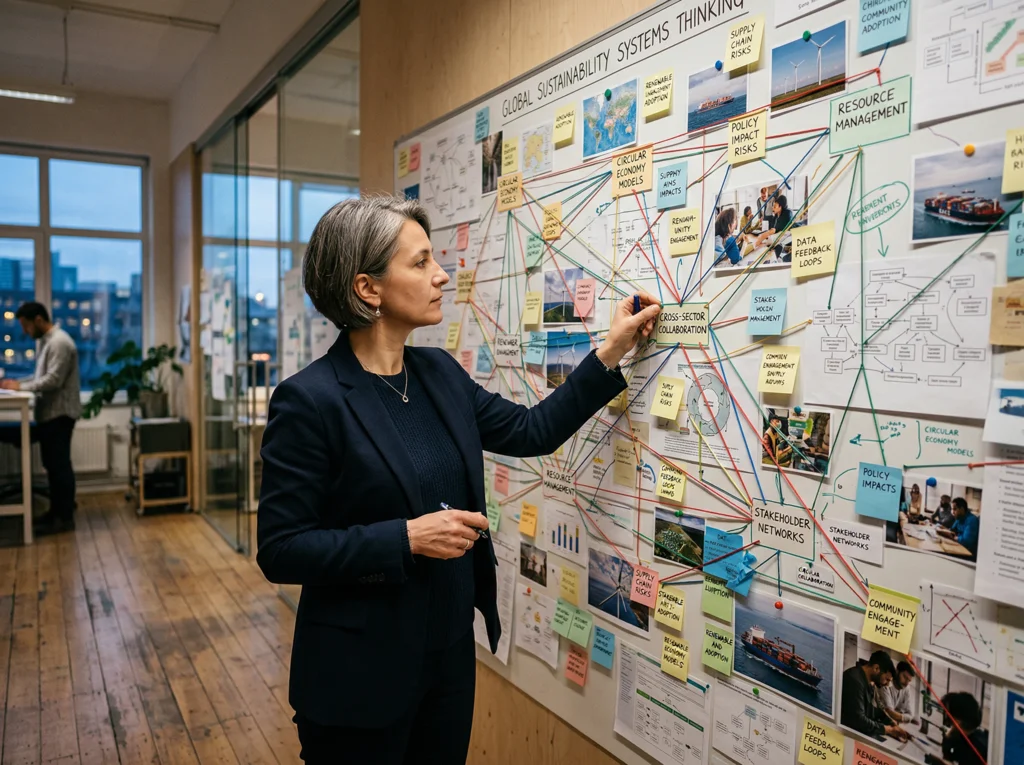
The first question looks backward. The second makes it possible to move forward.
Evidence-based leadership ultimately requires more than better tools. It requires leaders who treat numbers, narratives, staff observations, client voices, and community context as interconnected parts of a dynamic system.
It also requires a willingness to reflect honestly, even when the answers are uncomfortable.
But organizations that develop this discipline gain something invaluable: the ability to adapt before problems become crises.
About the Author
Amera Schaefer is a nonprofit executive and consultant with over a decade of experience in organizational leadership, strategic operations, and program development. A ThriveFunds co-founder since 2020, she most recently served as the Executive Director of the Paralyzed Veterans of America Wisconsin Chapter.
Her expertise includes donor strategy, CRM systems, governance, staff development, and operational improvement - grounded in a systems thinking approach to organizational effectiveness.
Previously, Amera served as a Consulting Analyst at Ascend Indiana and Senior Director of Operations and Analytics at Starfish Initiative. She currently teaches Human Services courses as Associate Faculty at the University of Arizona Global Campus.
Amera is deeply committed to civic engagement and has volunteered with AmeriCorps VISTA and served on nonprofit boards including Hope for Tomorrow and Beacon of Hope.
She holds an M.S. in Biological Anthropology and a B.A. in Anthropology magna cum laude from the University of Indianapolis and is completing her Ph.D. in Human Services with a specialization in human-centered design from the University of Arizona Global Campus.
Resources / Insights

From Corporate CSR to Independent Foundations: What It Really Takes to Scale Impact
4 min

Five Conversations That Help Mission-Driven Organizations Balance Mission and Margin
4 min

Why Community Coalitions And Integrated Planning Are Essential For Lasting Neighborhood Transformation
3 min

The Pre-Campaign Phase Most Organizations Get Wrong Why Feasibility Studies Fail When Culture Is Misaligned
4 min
Start with a free Impact Readiness
Review and uncover what’s holding
your systems back.