Resources / Insights
Resilient Nonprofits: Mastering Continuity and Internal Systems for Turbulent Times
In an era marked by unpredictability be it economic downturns, natural disasters, or public health crises - organizational resilience is paramount for nonprofits. At the crux of this resilience lie not just visionary leadership or good intentions but the robustness of internal systems and continuity planning. Sadly, many nonprofits remain painfully exposed to disruption due to fragmented processes, undocumented knowledge, and scant crisis preparation.
This article offers nonprofit leaders a comprehensive primer on Organizational Continuity & Internal Systems (OCIS). It combines practical frameworks, real-world scenarios, and tactical tools to help organizations build durability and agility for long-term impact regardless of external forces.
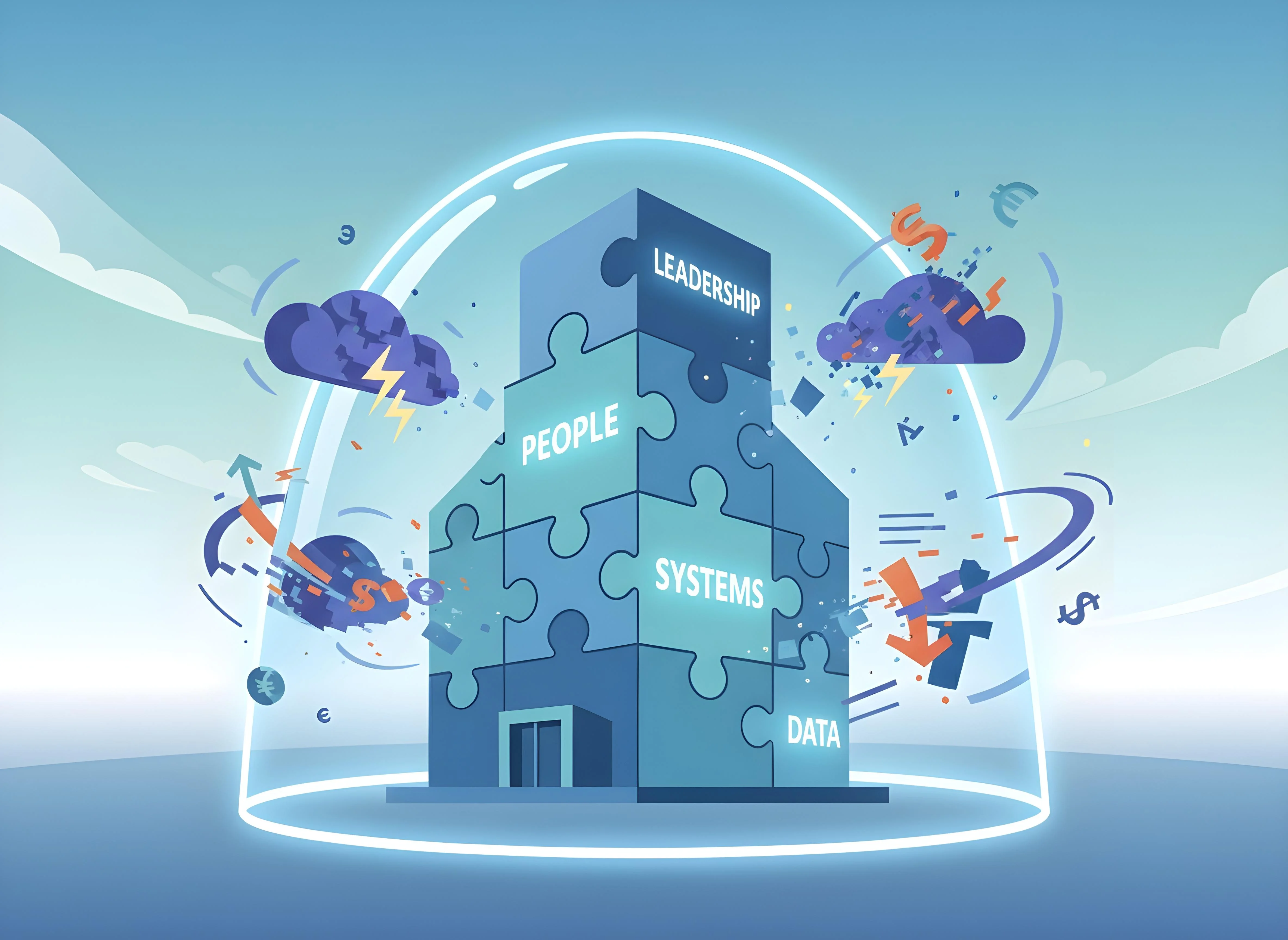
Understanding Organizational Continuity: More Than Disaster Planning
Organizational continuity transcends emergency backups; it is about ensuring mission delivery through stable systems regardless of circumstances. This includes:
- Identifying mission-critical functions beyond frontline programs, admin, finance, HR, IT.
- Evaluating risks using data-driven scenario planning for likely disruptions.
- Embedding flexibility into routine operations through adaptable processes.
Approaching continuity as an integrated system positions nonprofits to withstand shocks rather than simply survive them.
Mapping Mission-Critical Functions and Risk Appetite

A key step is identifying what cannot fail without derailing the mission. This often includes:
- Fundraising processing and reporting.
- Key personnel roles and knowledge holders.
- Technology and data security systems.
- Vendor relationships and contract management.
Organizations must assess their risk appetite: which systems require high availability, what contingencies exist, and what recovery times are acceptable. Mapping these indicators informs prioritization and investment.
Common System Gaps in Nonprofits
Frequent internal system challenges include:
- Disconnected IT platforms causing data silos.
- Manual knowledge management with undocumented workflows.
- Lack of internal controls leading to compliance risks.
- Insufficient communication channels impacting crisis response.
Nonprofits sometimes underestimate these “invisible” risks until they face costly incidents.
OCIS Solution in Action: A Roadmap
Building internal systems for continuity requires:
- Assessment: Conduct comprehensive audits of existing processes and technology.
- Documentation: Develop manuals, policies, and digital repositories for critical knowledge.
- Tech Integration: Adopt scalable tools enabling process automation and data centralization.
- Training: Empower teams with crisis response and continuity protocols.
- Testing: Run drills and update plans iteratively based on lessons learned.
Each step reduces fragility and strengthens operational confidence.
Digital Tools & Process Innovations

Technology offers nonprofits powerful enablers including:
- Cloud-based CRM and financial management systems.
- Project management platforms for coordinated workflows.
- Data backup and cyber security safeguards.
- Knowledge sharing spaces like intranets or collaborative document systems.
Choosing tools that fit budget and scale needs is vital for adoption and benefit realization.
Succession and Legacy Planning
Continuity planning overlaps deeply with succession ensuring key roles aren’t single points of failure. This involves:
- Succession mapping for leadership and key technical roles.
- Knowledge transfer programs including mentoring and documentation.
- Transparent communication strategies to manage transitions effectively.
Strong succession protocols preserve organizational memory and stakeholder confidence.
Peer Insights and Case Study

Leading sector voices emphasize embedding continuity into culture and operations, not just crisis manuals.A regional nonprofit faced leadership turnover but successfully weathered it due to prior knowledge transfer and documented processes, minimizing program disruption and donor concern.
Quick Assessment: How Resilient Is Your Organization?
- Identify your top 5 mission-critical functions.
- Rate the documentation level for each (none, partial, full).
- List your backup/recovery procedures and their tested frequency.
- Assess staff familiarity with crisis communication and roles.
- Establish timeline goals for restoring core functions after disruptions.
Regularly reviewing these indicators moves OCIS from plan to practice.
Conclusion
Building organizational continuity through robust internal systems is no longer optional but a strategic imperative for nonprofits facing an uncertain world. Embedding resilience into people, processes, and technology equips organizations not only to survive crisis but to thrive despite it.
Nonprofit leaders who embrace OCIS frameworks and tools today lay the groundwork for mission longevity and amplified impact tomorrow.
Resources / Insights

Mission First, Not Mission Only: How Nonprofit Leaders Can Navigate Crisis Without Drifting
4 min
Forging Resilience Across America: Strategic Insights on Nonprofit Capacity-Building and Sustainable Growth
3 min

Building Lasting Relationships: The Nonprofit Leader’s Guide to Donor Lifecycle Mastery
4 min
Resilient Nonprofits: Mastering Continuity and Internal Systems for Turbulent Times
4 min
Start with a free Impact Readiness
Review and uncover what’s holding
your systems back.