Resources / Insights
The Pre-Campaign Phase Most Organizations Get Wrong Why Feasibility Studies Fail When Culture Is Misaligned

True campaign success is rarely determined at launch.
On the contrary, it is shaped long before the public announcement, in the discipline, alignment, and honesty of the pre-campaign phase.
A feasibility study is often described as a mechanism to test financial goals and refine a case for support. But in practice, it serves a deeper purpose. It reveals whether the institution is structurally prepared to sustain ambition.
When leadership, governance, and messaging are aligned, a campaign gains quiet momentum before the first major solicitation. When they are not, even the most compelling case for support struggles to generate confidence.
The pre-campaign phase is less about projection, and more about cultural coherence.
Testing Readiness, Not Just Revenue

At its best, a feasibility study evaluates five interdependent forces within an institution:
- Reputation and trust
- Clarity of vision
- Leadership commitment
- Donor capacity
- Operational infrastructure
These factors do not operate independently. Weakness in one inevitably affects the others.
An organization may have donor capacity, but lack leadership unity.
It may have a compelling vision, but insufficient infrastructure to execute.
If misalignment surfaces during the study, the responsible course is adjustment, not acceleration.
Campaigns built on partial readiness often stall mid-course, not because donors lack generosity, but because confidence erodes.
When Institutions Are Not Yet Campaign Ready

Unreadiness is rarely dramatic. It reveals itself in subtle but persistent signals. An organization may struggle to articulate its purpose in a single cohesive sentence. Major gift relationships may exist, but lack depth. Staff turnover may create uncertainty. The board may attend meetings, but not actively advocate. Sometimes the challenge is structural - outdated systems, insufficient staffing, or absence of a written strategic plan. At other times, the challenge is internal: marketing, development, and program teams are not unified in message or priority. In these moments, proceeding with a campaign does not create clarity. It magnifies confusion. Readiness is not measured by ambition. It is measured by alignment.
Governance as a Campaign Asset

Board preparedness and leadership alignment are not peripheral considerations. They are central to campaign credibility.
A prepared board understands its role in governance, advocacy, and philanthropy. It recognizes the distinction between oversight and execution. It supports the campaign publicly and privately. Equally essential is the relationship between the board chair and chief executive. When communication at this level is transparent and disciplined, institutional trust expands outward. When fragmentation occurs, donors sense instability immediately. Campaigns do not tolerate ambiguity in leadership.
The Psychology of Donor Confidence Before Launch

Before any formal solicitation begins, donors are forming impressions.
They assess consistency.
They observe leadership unity.
They measure transparency.
Confidence grows when an organization demonstrates stability through clear messaging, impact storytelling, and thoughtful engagement that is not solely transactional.
Urgency can catalyze a gift.
But sustained confidence builds campaigns.
When feasibility studies are treated as cultural diagnostics rather than procedural exercises,
institutions move from hopeful aspiration to disciplined readiness.
And that distinction is what transforms a campaign from a fundraising event into a defining
institutional milestone.
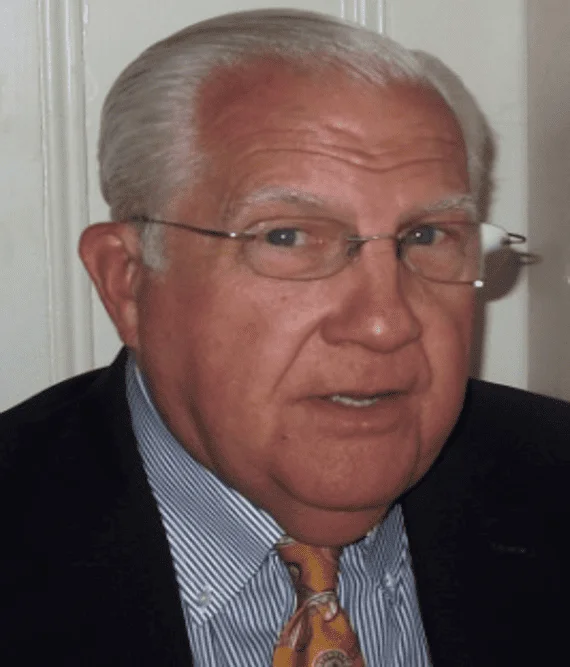
About the Author
Thomas R. Giddens is a seasoned development executive and fundraising strategist with leadership experience across higher education, performing arts, healthcare, environmental, and cultural institutions.He has served as Chief Development Officer at two institutions of higher education, including one with a campus and fundraising program based in London, as well as Director of Planned Giving at a major university. His leadership experience also includes serving as chief development officer for a major orchestra and the fifth largest performing arts center in the United States.
Through his consulting practice, TRG Consulting, he has advised public and private institutions nationally and internationally on feasibility studies, pre-campaign planning, campaign management, digital fundraising strategy, and the integration of annual, major, and planned giving programs. His work centers on strengthening institutional alignment, governance discipline, and donor confidence as foundations for long-term philanthropic success.
Resources / Insights

Evidence-Based Leadership in the Social Sector: Moving Beyond Good Intentions
5 min

From Corporate CSR to Independent Foundations: What It Really Takes to Scale Impact
4 min

Five Conversations That Help Mission-Driven Organizations Balance Mission and Margin
4 min

Why Community Coalitions And Integrated Planning Are Essential For Lasting Neighborhood Transformation
3 min
Start with a free Impact Readiness
Review and uncover what’s holding
your systems back.