Resources / Insights
From Friction to Flow: How Impact Beacon Harmonizes the Nonprofit Ecosystem
Why fragmented systems quietly drain mission-driven leaders, and what an integrated operational backbone makes possible.
Across a 30-year career in the nonprofit sector, I have had the privilege of serving as Executive Director for three different organizations. In all three, I ran into the same recurring issue. The cumulative weight of managing fragmented systems often felt like a barrier to the very impact I was trying to achieve.
My vision was simple. I wanted to start each morning by opening a single dashboard that gave me a panoramic view of every operational artery, from program metrics to financial health, all under one streamlined subscription. Instead, the reality for most executive directors is a digital labyrinth, where data sits siloed across multiple platforms that refuse to talk to each other.
When you are managing one CRM for program data, a second for donors, and a third for volunteers, "data entry" quickly becomes your primary occupation rather than mission delivery. Grant management gets stitched together from Excel spreadsheets and Google Calendars. Event planning lives inside a Word document. The risk of oversight grows, and the cost, both financial and in staff hours, becomes unsustainable.
When Inefficiency Seeps Into the Culture

The inefficiency I experienced ran deeper than reporting. It shaped the internal culture of each organization, turning essential leadership responsibilities into administrative distractions.
Human resources and employee performance evaluations are a good example. Tracked on static spreadsheets instead of integrated into the daily workflow, they lose their transformative potential. Managers need a dynamic tool that helps them guide their teams toward efficiency in real time, not a quarterly box-checking exercise.
That disconnection is felt at the governance level too. Board meetings should be an opportunity for high-level strategy. In practice, they are often preceded by a frantic scramble to compile reports, because the organization's website and internal software are operating in two separate worlds. A website that interacts with operational data in real time would offer transparency to the public, and it would also put accurate, pertinent information at board members' fingertips exactly when they need it.
Finding an Architecture That Actually Fits

Partnering with Impact Beacon offers a sense of relief I wish I had had access to years ago. They provide an environment where these fragmented pieces finally come together as a cohesive unit.
Through their Operational Continuity and Internal Systems (OCIS) framework, the focus is on building the internal architecture that turns reactive organizations into resilient ones. Whether the gap is data structure optimization or automation, the OCIS approach designs what is missing and moves nonprofits out of the "Excel trap" and into unified workflows. It builds a scalable backbone, closes tech gaps, and lets information flow seamlessly across the organization so the data every stakeholder sees is both accurate and actionable.
Bringing Order to Donors and Finances

The impact of integration becomes most visible in how an organization handles its most critical relationships and resources.
Impact Beacon's Donor Lifecycle Management (DLCM) and Governance, Financial Systems, and Accountability (GFSA) modules directly address the exhaustion of juggling multiple CRMs and financial tools. DLCM replaces scattered visibility with a structured, automated donor journey designed for lasting commitment. GFSA takes disorganized financial records and turns them into a transparent, audit-ready foundation.
The result is that the board is no longer reviewing weeks-old information. Instead, they are empowered with proactive governance communication. Budgeting and forecasting stay aligned with the organization's strategy, and leadership can finally move away from the chaos of disparate software into a future where financial integrity and donor growth belong to the same healthy ecosystem.
Reclaiming the Human Side of Leadership

The human side of leadership is reclaimed through the People, Culture, and Talent Systems (PCTS) framework, which moves employee engagement from a spreadsheet-based distraction into a purpose-aligned strategy.
Rather than performance evaluations feeling like an interruption to the "normal" flow of work, PCTS helps design systems that scale with the team, embedding inclusive values and clear growth trajectories into the organizational DNA.
This holistic approach means an executive director can finally stop being a software manager and return to being a visionary leader. With Impact Beacon, the dream of a single, efficient ecosystem, where one subscription delivers the clarity, efficiency, and resilience needed to scale, becomes a tangible reality. And when that happens, the mission takes its rightful place back at the center.
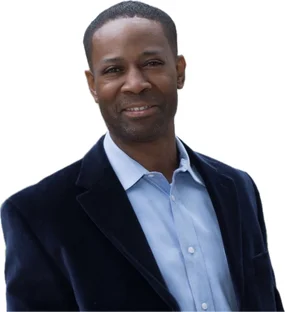
About the Author
Robert Montgomery is a highly accomplished nonprofit executive, published author, and fundraising leader with over 30 years of experience in organizational leadership, community development, and revenue generation. He has held senior leadership roles at organizations including the United Way, Boys & Girls Clubs, the Peoria Friendship House of Christian Service, the Urban Muslim Minority Alliance, and the Historic Pullman Foundation.
Robert has raised millions of dollars for mission-driven organizations through relationship-centered fundraising, strategic campaigns, and public speaking. His career includes leading major financial turnarounds, eliminating significant organizational debt, and building sustainable funding models rooted in trust and community engagement.
He began his fundraising journey as a minister at the Chicago Church of Christ, where he developed a deep appreciation for grassroots mobilization and authentic relationship-building. Robert holds a Bachelor of Arts in Urban Planning from the University of Illinois at Urbana-Champaign and a Master of Urban Planning and Policy from the University of Illinois at Chicago. His work continues to focus on creating practical blueprints that empower underprivileged communities through self-sufficiency, collaboration, and shared purpose.
Robert currently serves as a member of the Impact Council at Impact Beacon.



Start with a free Impact Readiness
Review and uncover what’s holding
your systems back.