Resources / Insights
Skills-Based Volunteering Is Capacity Building. It Isn't Charity
Why corporate pro bono only delivers lasting impact when nonprofits are treated as the experts on what they need.
By Alex Guiney
Skills-based volunteering (SBV) does something traditional philanthropy can't. It moves expertise into nonprofit organizations that otherwise can't afford to access it. A corporate strategist spending forty hours helping a small nonprofit figure out where its programs should grow over the next three years is delivering something most foundations would struggle to fund directly. That's part of why SBV is the fastest-growing employee engagement tool in US corporate philanthropy, and a meaningful resource for under-served communities.
It's also why corporate programs that treat it like charity, rather than capacity building, fail so consistently. SBV done well builds nonprofit organizations to be more sustainable, more strategic, and more capable. SBV done poorly is well-meaning at best, distracting at worst, and occasionally actively damaging. The difference between those two outcomes isn't accidental. It comes down to specific design choices, and most of them get made before a volunteer ever shows up.
What SBV is, and why it works
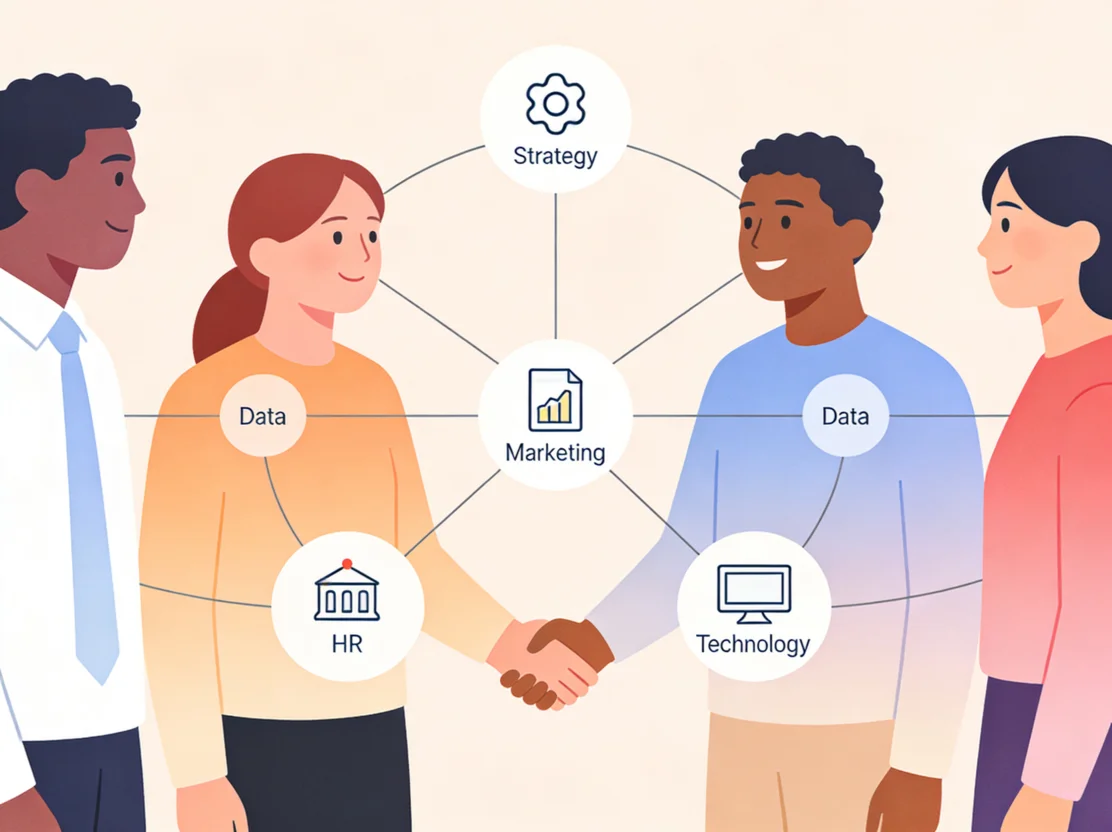
Skills-based volunteering, sometimes called pro bono, is the act of donating professional expertise to a cause, almost always a nonprofit. The field originally focused on legal pro bono and has since moved to encompass and leverage all professional skills on behalf of nonprofits and the communities they serve.Today, that might mean a data engineer building a case management system for a refugee resettlement agency, or a marketer rebuilding a small theater company's brand identity, or an HR director designing a competency framework for a youth services organization. It's a sharp departure from traditional volunteering, where the value sits in your hands and your time. With SBV, the value sits in what you have learned professionally, and how you can deploy it in different contexts.
This matters for two reasons that get under-discussed.
First, ninety-two percent of US nonprofits operate on budgets of $1 million or less
Second, some problems can't be solved with money. When a nonprofit ED works with a strategy-trained volunteer on where the organization should head over the next two years, they're not just getting access to a skill set. They're carving out time away from operations to think at altitude. Nonprofit leaders consistently report that wearing too many hats is a top contributor to their burnout and growth challenges. A well-scoped SBV engagement creates a forcing function for strategic thinking that the switching costs of the day-to-day usually crowd out.
The reciprocal benefit on the corporate side is more than feel-good. SBV develops exactly the human skills that AI is making more valuable, not less: active listening, problem-framing, working with ambiguity, and communicating across very different operating contexts. It's a strong experiential learning vehicle, particularly for younger workers who came up through a digitally native and Covid-disrupted education and need real-world reps with people who don't share their assumptions.
The demand makes sense on both sides. The harder question is why corporate programs so often fail to convert that demand into lasting nonprofit capacity.
Where these programs go wrong

The honest answer is that the power dynamic in SBV is heavily tilted toward the corporate funder, and programs that don't succeed often don't address that head-on.
The corporation pays for the program. Their employees take part in it. The nonprofit, in most cases, is grateful for the support and aware that pushing back on a funder is rarely a good career move for an executive director. So when a corporate program offers help in an area the nonprofit doesn't actually need, scopes a project too ambitiously to deliver real value, or pulls a leader's time at the wrong moment in their fiscal year, the nonprofit absorbs that mismatch. They smile and accept. The volunteer feels good. The corporate engagement metrics look healthy. And nothing lasting is really built.
This isn't a knock on individual volunteers, or on the corporate folks working to bring these program opportunities to their people. They are almost always operating in good faith and putting in real effort. The structural issue sits with the programs themselves.
Most corporate CSR, foundation, and employee engagement teams are chronically under-resourced relative to the volume of work they're being asked to deliver. That under-resourcing produces predictable shortcuts. Project scopes get written around what a corporate team or its volunteers can deliver, rather than what the nonprofit needs. Volunteers get matched on availability rather than fit. There's rarely anyone owning the question of whether the nonprofit can absorb and sustain what gets handed over once the volunteer leaves, and the work moves at the pace of the corporation's fiscal year, not the organization's capacity to take on something new.The result is that good intentions produce something closer to a band-aid than a build. The nonprofit ends up with a deliverable that may or may not address the challenges they're facing, but they rarely get a lasting boost to capacity, because the activity wasn't designed to produce one.
Strategic deployment looks different
The simplest reframing I can offer comes from grantmaking.
The trend over the last fifteen years toward general operating support, away from heavily restricted program grants, is welcome and comes from the same insight that should govern SBV: nonprofits are subject matter experts in their own work, and the funder's job is to resource them, not direct them. "Let the patient tell you what hurts" is the watchword in good philanthropy, and it's the watchword for good pro bono too.
That single principle changes how engagements get designed.
Short-term volunteering centers the needs and preferences of the volunteer. What do I want to work
on? What does my team have bandwidth for? What's a project that fits in two days, and which of our grantees might need it? Strategic skills deployment centers the nonprofit. What does the organization actually need, do they trust us enough to tell us, and do we hear them appropriately when they are asking for help? What's the right scope for the people doing the work to absorb? What does success look like in twelve to eighteen months, not just at the end of the engagement?
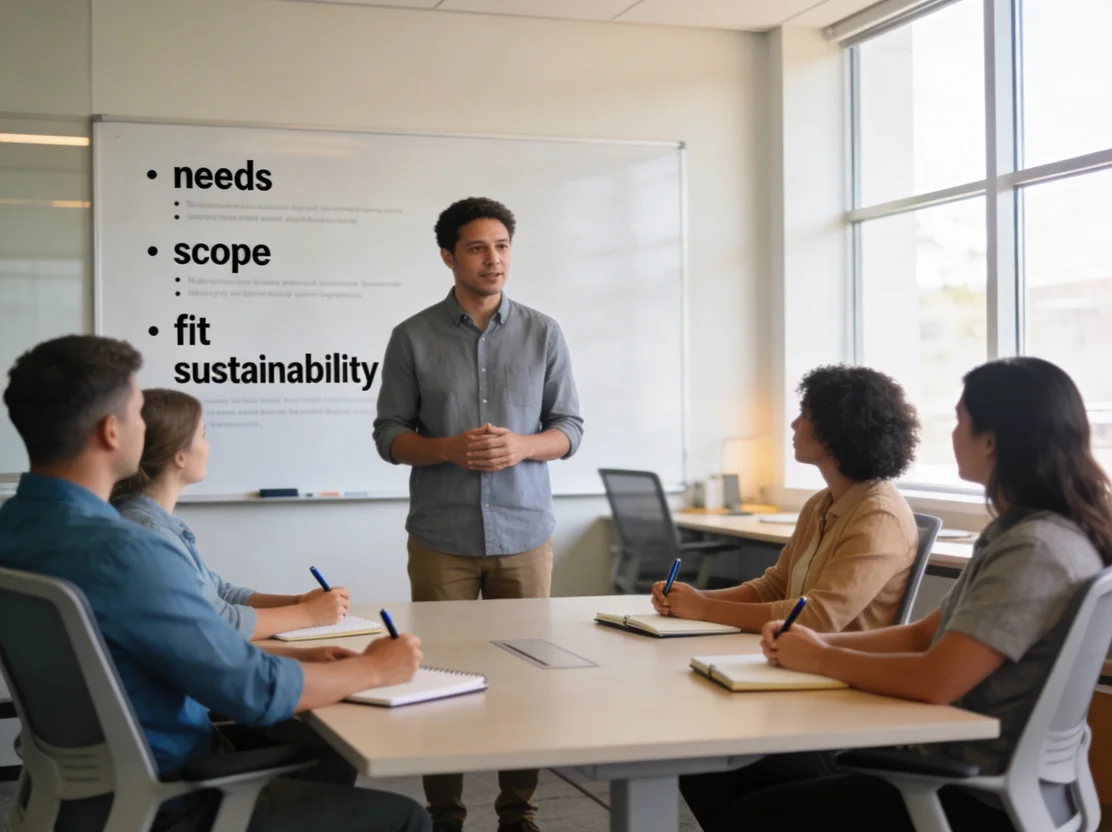
In practice, four questions should be asked and answered before a pro bono project is greenlit.
- Has the nonprofit defined this need themselves, or is it being suggested to them? Either can work, but the nonprofit has to actively own the problem statement by the end of scoping. If they're nodding along but not engaged, the project is already in trouble. Re-scoping once in flight is fine, as long as it's a conscious, mutually agreed decision, not a reaction to a lack of clarity or alignment at the outset.
- Does the volunteer's expertise match the actual work, or just sit adjacent to it? A senior brand marketer can usually run a brand refresh well. They are not a substitute for an organizational strategist, even if both involve "strategy."
- Is the time commitment honest on both sides? Volunteers consistently underestimate what a project takes. Nonprofit leaders consistently underestimate the time it takes them to participate well. Pad both, and militantly guard against scope creep once the project is underway.
- Can the nonprofit run with the deliverable after the volunteer is gone, without ongoing support that won't be there? If the answer is no, the deliverable is a liability, not an asset.
If any of those four are wobbly, it's almost always better to pause the project than push it through. Sometimes the right call is to stay home, for all involved. Pausing a project is a sign the philanthropic pairing is working as designed: the two parties are listening to each other, acting in good faith, and responding to shifting circumstances together without rupturing the relationship.
Systems, not programs

The other shift that separates capacity building from charity is what the work targets.
Most early-stage SBV in any company tends to focus on programmatic work: the website refresh, the marketing campaign, the event collateral. These projects are visible, time-bound, and relatively easy to staff. Although meaningful and often necessary, they also rarely produce capacity.
Capacity sits in systems. The HR processes that determine whether a nonprofit can hire and retain talent, and the financial infrastructure that determines whether they can plan beyond the current grant cycle. The data and CRM architecture that determines whether they can demonstrate impact to funders, and the strategic planning rhythm that determines whether they're growing on purpose or by accident. These projects are less photogenic than a website launch, and they're the difference between an organization that scales and one that runs itself (and its people) ragged.
A useful test: can the nonprofit get twelve to eighteen months of solid runway out of this deliverable, plugged into the way they actually work? If yes, you're probably building capacity. If no, you've made something nice for the volunteer to put on their LinkedIn. That might help an organization in a limited way, but not in a way that lets them do it themselves the next time.
A useful mental model: building infrastructure is like building a house. If the first angle is one degree off, the whole structure will be out of balance no matter how many adjustments you make to the walls as you go. Most nonprofits aren't lacking passion or program design. They're lacking the back-office architecture that lets the passionate generalists in house actually do their best work without burning out.
SBV won't fix nonprofit burnout. The sector's working conditions are a much larger conversation involving wages, philanthropic patterns, and the structural pressure of doing publicly funded work in a private-funding-model society. What well-designed SBV can do is meaningfully lighten the operational drag (manual processes, high switching costs, the emotional expenditure of context-shifting all day) that consumes the time of back-office and service delivery staff. That lift, repeated across enough engagements, raises both the floor and the ceiling of what the organization can sustain.
Measuring what matters

Even for programs that successfully build capacity, measurement is where a lot of teams lose the thread. Partly because there are so many possible angles, and partly because the audiences for the data want different things. Effective measurement is crucial to earning the right to deliver again, and it needs the same rigor as the program design itself.
A workable approach has three layers, depending on which stakeholder group you represent.
At the nonprofit level, the questions worth asking are about the organization's working conditions and capability. Are people more engaged at work than they were before the project? Is there less unplanned usage of PTO and sick time? Is information flowing through the organization more easily, as reported by the people moving it? Is program delivery getting easier, as defined by the people delivering it? Pulse surveys, structured check-ins at six and twelve months, and qualitative interviews with the people closest to the work are the right instruments. Don't outsource this to the funder's metrics dashboard.
At the corporate level, the questions are about workforce development, not just engagement. Are participation rates high and growing? Are participants demonstrably better at the human and technical skills the company is trying to develop in its people? Are they describing a stronger sense of alignment between their personal values and the company's, and a deeper sense of pride in their employer? Engagement is the easy metric. Skill development, emotional connection, and downstream retention and advancement are the metrics that justify the program over time.
At the sector level, the questions are about whether SBV is actually producing the outcomes the field claims for it. The metrics most commonly used in the field track revenue impact, cost reduction, program reach, and operational efficiency. These are strong indicators, easily understood, and they're the gauges the field tends to claim. Tracking them honestly is the only way to know whether the claims hold up.
The principle across all three: figure out who you need to influence, take your best honest guess at what evidence will move them, and collect data consistently using a mix of instrumental measures (the surveys and dashboards) and intrinsic ones (interviews and focus groups). Debrief after every engagement. Be willing to find out the project didn't work. That's where the real signal lives.
The reframe
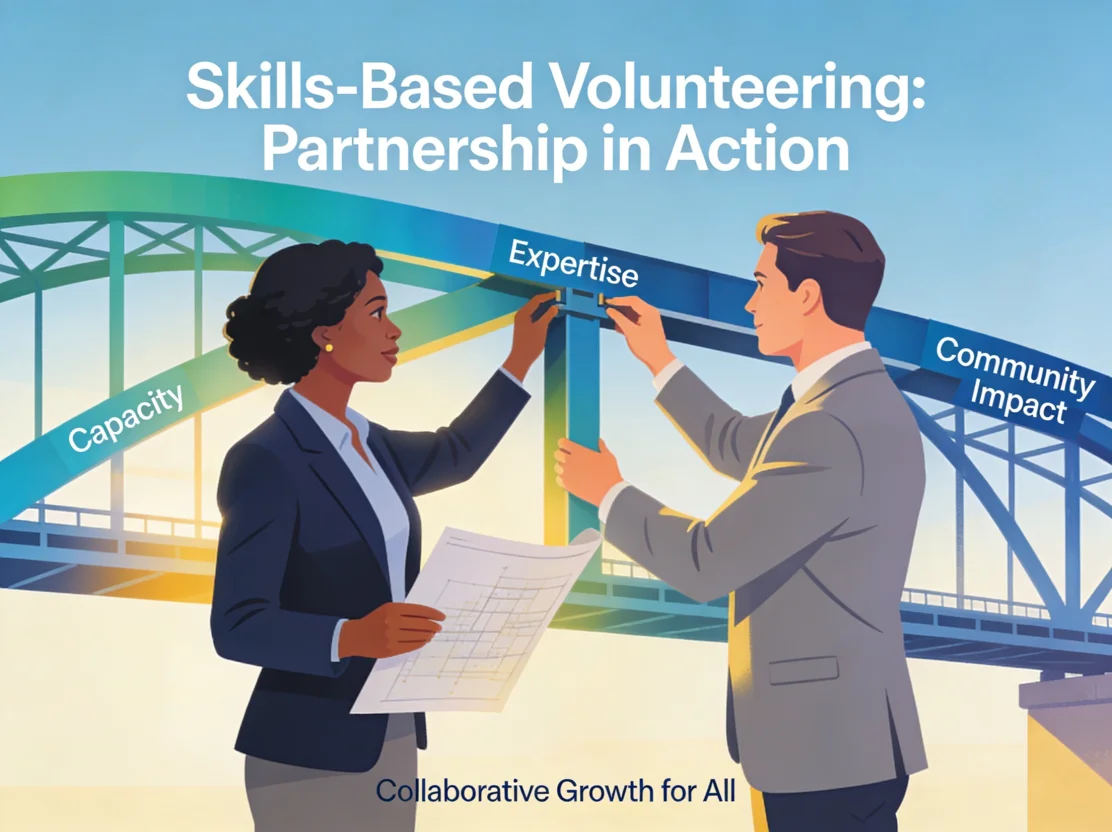
Charity is the wrong frame for SBV, even though it sits inside the broader category of philanthropy. Charity implies a one-way flow, with the donor's preferences setting the terms. Capacity building treats the nonprofit as the expert on what they need, the volunteer as the resource pointed at that need, and the corporate program as the connective tissue making sure the right resource lands in the right place at the right time.
Done with discipline, this work raises both the capacity floor and the capacity ceiling of the organizations on the receiving end, and heightens the downstream impact on the communities those organizations serve. The result is a sector with more institutions that can stand on their own, and more people getting served well by them.

Alex Guiney
Alex Guiney (he/him) is a seasoned nonprofit professional and social impact consultant with a career dedicated to building and advising on innovative business models that promote resource equity for nonprofits and the communities they serve.
As a Managing Consultant in the Advisory Services practice at Taproot Foundation, Alex manages a portfolio of Fortune 500 clients, designing and delivering Skills-Based Volunteering programs at scale.
Prior to joining Taproot, Alex held senior finance and operations roles in various nonprofits in both the US and UK, where he specialized in private-public partnerships, "meanwhile" use of commercial real estate, and the development of public artworks and gathering spaces as community resources. He also acted as a consultant for emerging creative businesses, building out operational, finance, and governance systems for clients on both sides of the Atlantic.
Alex lives in Brooklyn, NY with his wife and son




Start with a free Impact Readiness
Review and uncover what’s holding
your systems back.