Resources / Insights
Empowered Teams and Emotionally Intelligent Leadership
Building cultures of trust, learning, and human-centered decision making
By Matthew David Gellin and Impact Beacon
In theatre, you cannot fake presence. An audience knows within seconds when a performer is going through the motions versus when they are genuinely in the moment, listening, responding, and making real decisions in real time. That truth has shaped everything about how Matthew David Gellin thinks about leadership.
Matthew is the Executive Artistic Director and CEO of American Legacy Theatre (ALT), a Cincinnati-based organization advancing equity, dialogue, and community transformation through performance. He came to nonprofit leadership as a trained artist, and he has never tried to separate the two.
"I have an unfair advantage over many other leaders, because I am a trained artist. My master's studies have been entirely dedicated to the art of listening, being in the moment, and responding."
ALT’s tagline is “empowering voices for equity”. Matthew is the first to say that phrase has to mean more than programming. It has to live in how decisions are made, how teams are built, and how leaders show up under pressure. Empowerment is not something you announce. It is something you build every day through how you lead.
Psychological Safety as the Foundation

One of the cornerstones of an empowered team is psychological safety: the shared understanding that people can speak honestly, take risks, and bring their full perspective to the work without fear of penalty. At ALT, this does not live in a written policy. It lives in the daily rhythm of the organization.
Every morning, the ALT team takes part in a “wins and challenges” check-in. Each person shares something going well and something they are working against. The win can be personal or professional. So can the challenge. "Give us something right, as a collective," is how Matthew frames it. The challenge is where the real work begins.
"I participate in that every day. And my challenges are not disingenuous ones."
He offers a recent example. ALT had begun rehearsals for a world premiere production and still did not have a stage manager, one of the most critical roles in the operation. In the daily check-in, Matthew said it out loud: not only do we not have this person yet, he was running short on ideas. An entry-level team member responded by offering contacts from her own network. The contacts did not work out —but that was not the point.
"Showing vulnerability as a leader is a huge component of creating that kind of space."
Someone who might never otherwise have spoken up in a room with the CEO had a clear pathway to contribute. The practice created the opening.
Psychological safety also sometimes requires protecting it, even at real cost. ALT is currently running a statewide project in Ohio funded by the Department of Behavioral Health. During the partnership, requests came through that could have compromised the safety of LGBTQIA+ artists on the team.
"We pushed back from a state level, and we were ready to walk if need be, despite them being our largest funder."
The department responded constructively. But in school environments, where ALT partners on issues of equity and belonging, the organization has gone further. The commitment is communicated before anyone walks in: if certain situations arise, they leave. They have exercised that commitment.
Matthew is careful to draw a distinction that gets blurred in many conversations about inclusive culture: safety and comfort are not the same thing.
"There is a difference between safety and comfort. You're going to have to go into uncomfortable situations. But as long as you're safe, this is part of the work."
That clarity, established before anyone enters a difficult environment, is a form of trust-building. And it connects to something Matthew says about culture more broadly: "You can't create an entire culture where only one personality type thrives." The inquisitive person needs room to be inquisitive. The careful, deliberate thinker needs room to work that way. When an organization, even unconsciously, rewards only one mode of operating, it starts losing the range of thinking that makes it genuinely strong.
Learning as the Response to Failure

In theatre, a rehearsal that goes poorly is not a failure. It is data. The scene did not work because of a specific choice, and now the company knows not to make that choice again or to spend time understanding why it was made in the first place. Matthew carries that same philosophy into how ALT handles setbacks.
"In American Legacy Theatre, failure is inevitable. Something we're always trying to work against, but it is going to happen. The biggest question at the end of the day is: what did we learn from this?"
Organizations that treat mistakes as things to avoid at almost any cost usually end up avoiding the experimentation that would make them stronger. When people believe a setback will be met with blame or silence, they choose safer paths. They stop stretching. The mission suffers for it.
At ALT, when something goes wrong, the question is not who is responsible. It is when did we first see this coming, could we have responded earlier, and what do we know now that we did not before? The goal is to make the learning explicit so the whole team carries it forward, not just the person closest to the problem.
The goal is not to normalize failure. It is to build teams willing to take informed risks because they trust that the response will be thoughtful rather than punitive. That distinction is everything.
Emotional Awareness in Leadership

When people ask Matthew where his emotional awareness as a leader comes from, his answer is direct: arts training. And he has spent years building deliberately on top of it.
"My master's studies have been entirely dedicated to the art of listening, being in the moment, and responding. Those three things. Listen. Respond. Be in the moment. Simple. But like meditation, being a master at it is very challenging."
He uses the martial arts to explain how he thinks about his own development.
"I always describe the work as kind of akin to the martial arts, in the space of empathy. I sometimes joke that I have a fifth-degree black belt in empathy, it also means I’m still working toward the sixth."
That framing holds two things at once: real skill, and the acknowledgment that there is still more to develop.
"When the leader stops seeking self-improvement, that is when that emotional awareness starts to deteriorate."
Matthew is also specific about what empathy actually means, because he finds the word gets used in ways that miss most of it. Intellectual empathy - understanding where someone is coming from is only the first layer.
"I feel the emotions that you are feeling. And then there's a crossover. How does that actually change your behavior? If your behavioral shift in empathy happens, now you've got some emotional awareness to really bring into leadership."
He recently started practicing Tai Chi, and offers it not as a side note but as a deliberate part of how he continues to grow.
"For somebody like me, who is a driver, who is a go-go-go-let's-go kind of person, Tai Chi's inherent art form is: slow down."
He is a beginner. A new white belt. That is the point. Every leader has to find the practice that actually stretches them, not the one that reinforces what they already know how to do.
He also speaks to what direct participation in the performing arts does for leaders who come from outside it. When leaders get into a room and actually do the work, not as observers but as practitioners, something opens up. "You are embracing this side of self that maybe you don't ever show at work." That vulnerability is the entry point to developing the kind of listening that an empowered team requires of its leaders.
Values as the Anchor During Conflict

Matthew holds a clear view about conflict that shapes how ALT navigates it.
"Conflict is always a dance. A conflict that looks similar to a previous conflict may be solved in a completely different way. Because it's now a different time."
What gives a leader consistency across different conflicts is not a playbook. It is shared values that function as a reference point regardless of what the specific situation looks like.
ALT's organizational values are to invite, innovate, and invigorate. But the deeper baseline, as Matthew describes it, is assuming the best of intentions. Before he walks into a difficult conversation, he runs a quick mental exercise: if the other person said or did what they did with the best of intentions, does that change how I feel going in?
"And the answer is yeah, most of the time it does."
Someone may have said something that landed badly, but they were probably not trying to cause harm. Starting from that assumption changes the quality of the conversation that follows. It does not erase the tension. It removes the defensiveness that rarely helps either party.
Values also function as a practical leadership resource, particularly in a nonprofit structure where the CEO reports to a board. When a direction needs to be explained, or a request needs to be pushed back on, the values give Matthew language that is larger than personal judgment. "Because these are our values, this is why we need to go down the path we're going, or why we're saying no." That is grounded in something the organization agreed to together.
On policy, Matthew draws an important line. At ALT, psychological safety is a standing commitment: anyone on the team, regardless of title, can say in an all-staff meeting that they do not think something is a good idea and explain why. No repercussions. The policy protects that. But policy can also become too prescriptive, and when it does, it starts shortcutting the human judgment that values were meant to support.
"If you're late to work five times in a month, you're fired. What a stupid policy. I understand the idea. Don't be late. But what if the person was late five times because their child's bus arrived 25 minutes late for school and they’re too young to wait by themselves?”
Policy would terminate a committed team member for something entirely outside their control. Values would ask a completely different set of questions. As Matthew puts it: "Go back to the values of the organization and make sure the values are living out in the policy, not that policies are creating efficiencies for efficiency's sake."
Communication as a Human Practice

Most organizational communication today happens through email. It is convenient. It is also, frequently, where things go wrong.
At the root of most communication failures is a gap between what someone intended to say and how it actually landed.
"There is what your intent is around communication and how the communication is received. Those could be two wildly different things."
Matthew grounds this in something leaders know but rarely act on consistently: for most of human history, people communicated primarily through body language. Across cultures, across languages, across centuries, posture, timing, expression, and tone carried meaning that words alone never could. The words themselves account for roughly 5% of how the human body receives information.
"If it's so important that you want your entire team to know something, whether your entire team is one person or 4,500 or more, why are you using an email? That does not seem like a great way to mitigate risk.”
He says this with full self-awareness: he has done it himself. "Easy does not always get us to where we're trying to get to." When something has emotional weight or complexity, the mode of communication is a leadership decision, not an administrative convenience. The harder, more present path - the phone call, the in-person conversation, the meeting where people can actually see and hear each other creates a different quality of understanding. Choosing that path is itself a form of investment in the team.
Empowerment as a Leadership Discipline

Everything Matthew describes — psychological safety, honest reflection after setbacks, emotional awareness, values-based conflict navigation, and present communication — comes together in one fundamental commitment: trust.
"The last final piece around empowering teams is acknowledging that people are being brought in with a great deal of trust in their abilities. Drive is an intentional word. To drive the work forward in their space of expertise."
Matthew could personally manage community outreach, education partnerships, or development strategy at ALT. He has knowledge across all of those areas. But when someone has been hired whose primary function is in one of those lanes, his job is to trust them to drive it.
"If I'm hiring somebody whose primary function is there, and it syncs with their skill sets and expertise, then I need to trust that they've got that point."
The people closest to a particular area of work carry something no leader at the top of an organization can replicate: direct, daily experience of what is actually happening on the ground. That experience is not just context.
"Living in that space of their lived experience, being day to day in that environment, is also the most critical intel that we will ever have."
Empowered team members also carry a responsibility: to flag when something is beginning to go wrong before it has gone too far. A team that waits until a problem is impossible to ignore is not yet fully empowered. A team that speaks up early because they trust the response will be honest and constructive rather than punitive is what the daily check-ins, the values, the psychological safety commitments, and the emotional awareness all build toward.
Empowerment is not a slogan, a policy, or a tone in a meeting. It is a discipline. And like any discipline, it shows its true nature not in the easy moments but in the hard ones: the conversation that needs to happen, the decision that goes against what is convenient, the leader who admits they are running short on ideas and waits to see who speaks up.
That is what an empowered team looks like. And it starts with the person at the top deciding, every day, to practice it.
About the Author
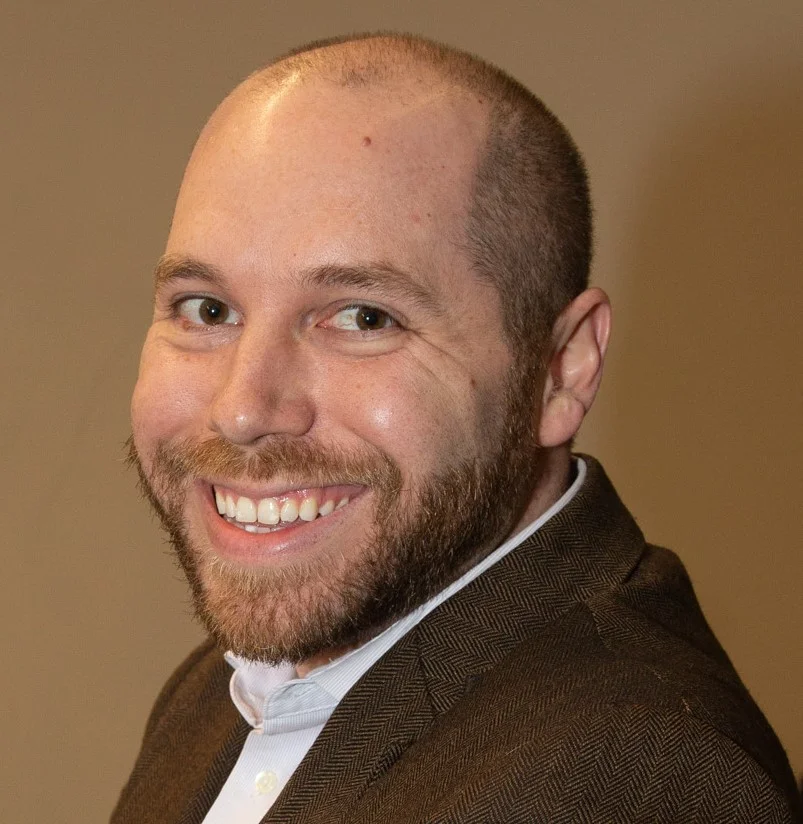
Matthew Gellin is the Executive Artistic Director and CEO of American Legacy Theatre (ALT), a Cincinnati-based organization advancing equity, dialogue, and community transformation through storytelling and performance. A CFRE and trained performing artist, Matthew has successfully acted and directed across the United States, Europe, and Asia. He served as a U.S. representative at the UNESCO International Theatre Institute Research Lab in Romania, has been named a Promising Artist of the 21st Century by the International Arts and Cultural Exchange, and has published papers on directorial theory in international peer-reviewed journals. He has been recognized as one of Cincinnati Business Courier's Forty Under 40, served as a U.S. delegate to the People's Republic of China for foreign business affairs, and currently serves on the executive committee for the Association of Fundraising Professionals Foundation for Philanthropy USA.



Start with a free Impact Readiness
Review and uncover what’s holding
your systems back.